
Life insurance with living benefits · Texas
Life insurance you don't have to die to use.
A living benefits policy pays a portion of its death benefit while you are alive if you are diagnosed with a serious illness. Same premium as traditional coverage from the same carriers. We explain it in plain language and quote it from several.
- Pays your family if you die too soon
- Pays you if you become seriously ill
- Builds value you can use if you live a long life
Independent, not captive
Multiple carriers per quote
Same day turnaround
Your details never sold
What living benefits are
Not only in case you die. Also in case you don't.
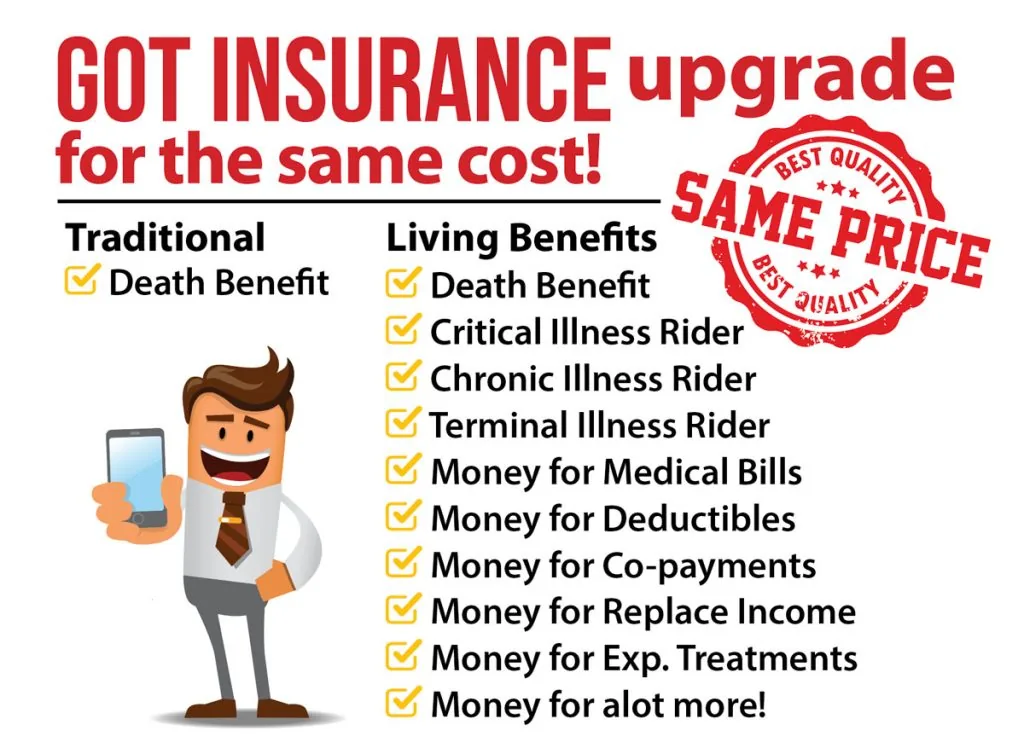
Traditional life insurance pays one benefit, to someone else, after you die. A policy with living benefits adds riders — at no extra premium with the carriers we work with — that let you draw on a portion of that benefit yourself if you are diagnosed with a critical, chronic or terminal illness. The money is yours to use: medical bills, deductibles, replacing income, experimental treatment, or simply keeping the household running.
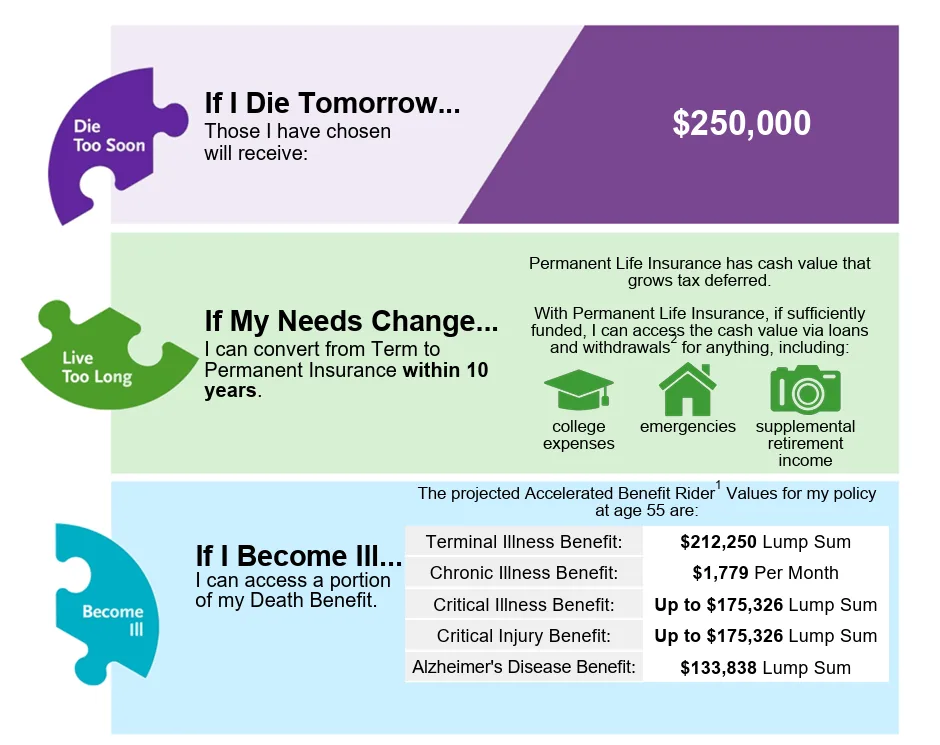
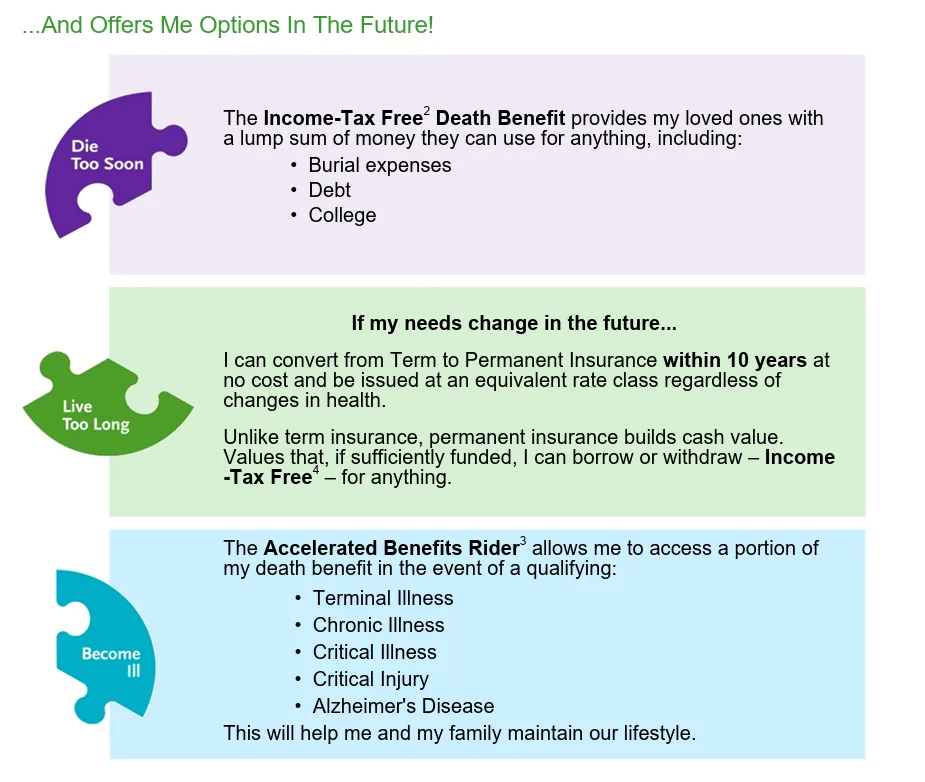
- Die too soon. The income-tax-free death benefit goes to the people you name, for anything: the mortgage, debt, college.
- Live too long. Permanent policies build cash value you can borrow or withdraw for emergencies, college or supplemental retirement income.
- Become ill. An accelerated benefit rider pays a portion of the death benefit to you on a qualifying terminal, chronic or critical illness or injury.
Qualifying conditions, benefit amounts and rider availability vary by carrier and by state, and the accelerated payment is less than the portion of the death benefit it replaces. We go through the actual rider language with you before you apply.

Why it matters
Serious illness is the more likely event.
Most people will face a serious diagnosis before they face their own funeral, and a serious diagnosis is expensive in ways health insurance does not cover: time off work, travel, a spouse who stops working to help, deductibles that reset every January. A living benefits policy is the one piece of coverage designed for exactly that moment.
Same premium. One more thing it does.
With the carriers we quote, the riders come with the policy at no additional premium. If you are already paying for term or permanent life insurance without them, you are paying the same price for less.
Policy types
Living benefits ride on the policy you already need.
The riders attach to term, indexed universal and whole life policies. Which base policy is right depends on how long you need the coverage and whether you want it to build value.
Term life with living benefits
A fixed premium for 10, 20 or 30 years, with critical, chronic and terminal illness riders included. The most coverage per dollar, and convertible to permanent cover later without a new medical exam.
Indexed universal life (IUL)
Permanent coverage that builds cash value tied to a market index, with a floor against losses. Living benefits riders plus a tax-advantaged pool you can borrow against in retirement.
Whole life with living benefits
Level premiums for life, a guaranteed death benefit and guaranteed cash value growth. The steadiest option for people who want certainty over upside, with the same illness riders attached.
Carriers we quote
Independent, so we can show you more than one answer.
We are not tied to a single company. These are the carriers whose living benefits riders we quote today; the right one depends on your age, health and what you want the policy to do.




Carrier names and logos are the property of their owners and indicate appointment, not endorsement. Products and riders are not available in every state.
How it works
Three steps, no pressure
01
Tell us who needs covering
Two minutes on the quote form: date of birth, the amount you have in mind, tobacco use and general health. If you already have a policy, tell us what you pay and we will compare it.
02
We quote it from several carriers
You get a short comparison rather than a stack of illustrations: what each carrier charges, what its riders actually pay on a diagnosis, and which one we would put our own family on.
03
Apply, and we stay on the file
We handle the application and any medical requirements, then stay with you: a rider claim years from now is a phone call to us, not a form to find.
Why trust us
Credentials you can check yourself
Every claim on this page is a matter of public record. Look up the licence with the Texas Department of Insurance, or the rating with the BBB.
A+
Better Business Bureau rating
Accredited with zero complaints on file, under Deschenes Financial Services.
1989
Serving Texas since
More than three decades placing coverage for Texas families through Deschenes Financial Services.
Licensed
Texas insurance agency
Mark Deschenes, General Agent. NPN 1068695, Texas licence 16046.
Questions
Answers before you hand over your details
What are living benefits, in one sentence?
Riders on a life insurance policy that let you receive a portion of your own death benefit while you are alive if you are diagnosed with a qualifying terminal, chronic or critical illness or injury.
Do living benefits cost extra?
With the carriers we quote, the accelerated benefit riders are included at no additional premium. You pay for the base policy; the riders come with it. That is why we compare an existing policy without them against one with them at the same price.
Which illnesses qualify?
It depends on the carrier and the state, and the rider language is what counts. Typically: a terminal diagnosis with a limited life expectancy; a chronic condition that leaves you unable to perform two of six activities of daily living or cognitively impaired; and critical events such as heart attack, stroke, cancer, major organ transplant or end-stage renal failure. We show you the exact list for each policy we quote.
How much does the rider pay?
A portion of the death benefit, calculated by the carrier at the time of the claim and paid as a lump sum or, for chronic illness, sometimes monthly. The amount you receive is less than the portion of the death benefit it replaces, because it is paid early. The money is unrestricted: medical bills, income, travel, anything.
Does using a rider reduce what my family gets later?
Yes. Whatever portion is accelerated is subtracted from the death benefit. The remainder still pays to your beneficiaries. You choose how much to accelerate, within the policy limits, when you make the claim.
Does a quote cost anything, or obligate me?
No. Quoting is free and there is no obligation. We are paid a commission by the carrier only if you place a policy through us. We do not sell or share your information with third-party marketers.
What do you need from me, and how fast is it?
Date of birth, the coverage amount you have in mind, tobacco use and a general idea of your health. Requests sent during business hours are answered the same day. A full application may need a short medical questionnaire or, for larger amounts, a paramedical exam the carrier arranges.
Find out what living benefits would cost you.
Send us the basics and we come back the same business day with options from carriers that fit — and a plain explanation of what each rider actually pays.
Or call the office during business hours:
210-696-7900