
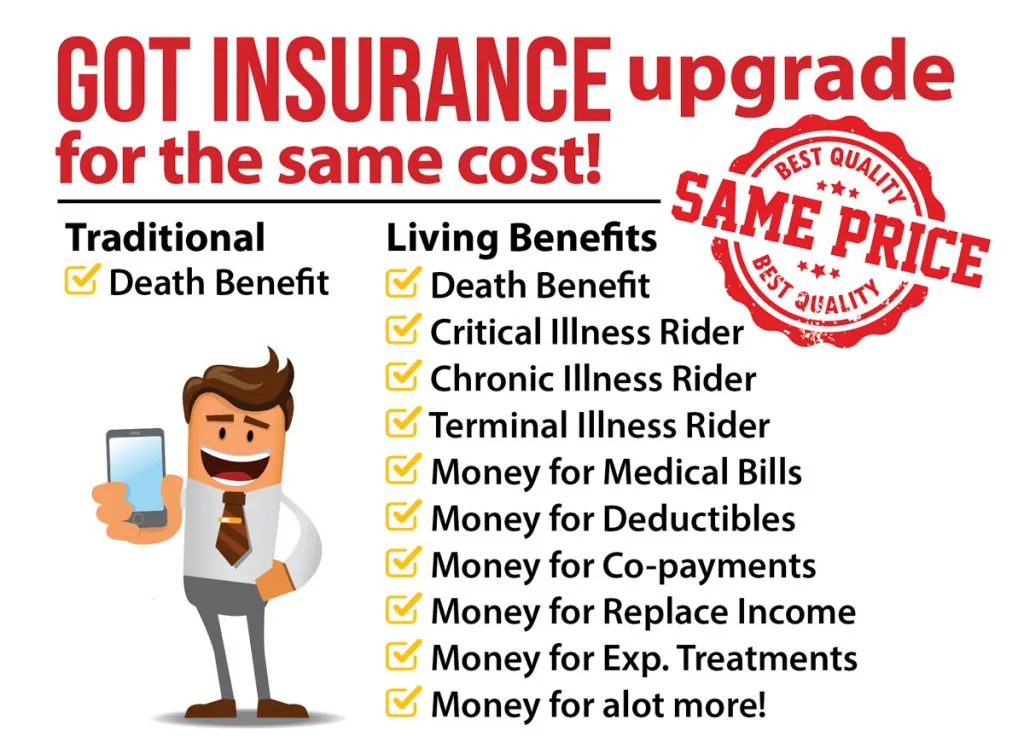
Living benefits riders attach to a base policy, and the base policy is the real decision. The riders — terminal, chronic and critical illness — behave the same way on all three of the policy types we quote. What differs is how long the coverage lasts, what it costs per dollar of protection, and whether anything accumulates inside it.
Term life: the most coverage per dollar
You choose a term of 10, 20 or 30 years and a coverage amount; the premium is level for the whole term. Term is the right answer for most families in their earning years, because the need is large and finite: a mortgage, children at home, income that would need replacing. The riders are included, so a serious illness during the term is covered as well as a death.
The one feature to check before you buy is conversion. Most of the carriers we work with let you convert term coverage to a permanent policy within a set window without a new medical exam, regardless of how your health has changed. That option is worth more than it looks on the day you sign.
Indexed universal life: permanent, with cash value tied to an index
An IUL is permanent coverage. Part of each premium buys the insurance; the rest goes into a cash value account credited with interest linked to a market index such as the S&P 500, subject to a cap and — importantly — a floor, typically 0%, so a down year does not reduce the account. The cash value grows tax deferred and can be accessed through policy loans and withdrawals, which are generally income-tax free when the policy is structured and funded properly.
It suits people who want lifelong coverage and a supplemental, tax-advantaged pool for later life, and business owners and higher earners who have filled their other tax-advantaged accounts. It is also more complex than term: caps, participation rates and costs differ between carriers, and an illustration is a projection, not a promise. We walk through the guaranteed columns with you, not only the projected ones.
Whole life: guarantees over upside
Level premiums for life, a guaranteed death benefit, and cash value that grows on a guaranteed schedule, often with dividends on top from a mutual carrier. Whole life costs more per dollar of coverage than term because it is designed to pay eventually and to build value. What you get for that is certainty: a policy you never have to revisit, and guaranteed value you can borrow against.
The honest answer for many households: a mix
- Term for the years of highest need, sized to the mortgage and the income gap.
- A smaller permanent policy — IUL or whole life — that stays for life and carries the same living benefits.
- Conversion rights on the term policy, so the mix can shift later without new underwriting.
We quote all three across several carriers and show you the differences that would matter for you, not just the premium. Two minutes to send us the basics; we come back the same business day.